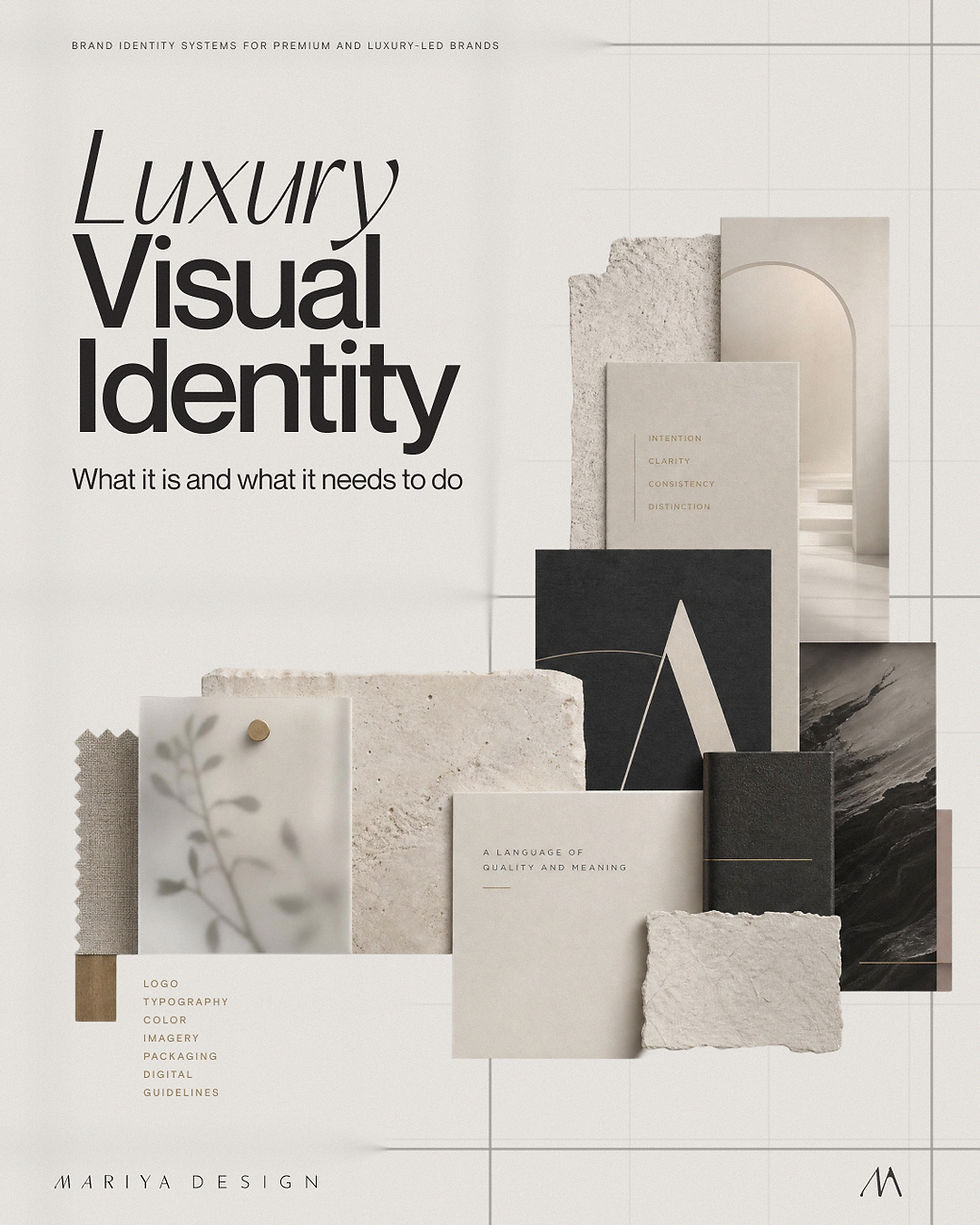
Premium brand identity vs luxury brand identity: what’s the difference?

Updated: Sep 12
A founder may say they want a luxury brand identity when what they actually need is a premium one.
That distinction matters.
Premium and luxury are related, but they do not ask the same things from a visual identity. Premium usually needs trust, clarity, polish, and consistency. Luxury often needs a more specific level of perception: restraint, rarity, atmosphere, craft, status, service, or cultural value.
Both can look refined.
Both can use strong typography, considered color, beautiful packaging, and a polished website.
But they are not the same brief.
A premium brand identity helps a brand look credible, well-made, and worth choosing above a mainstream alternative.
A luxury brand identity has to support a more specific belief: that the brand belongs at a higher level of value, desire, selectiveness, or experience.
This is where many brands get confused.
They ask to “look luxury” when the real problem is that the brand does not yet look trustworthy, consistent, or premium enough. Or they try to look luxury by borrowing surface codes, when the product, price, audience, and customer experience do not support that level of perception.
That is how a brand can start to feel forced.
The better question is not only:
“Should this look more expensive?”
The better question is:
“What level of perception does this brand actually need to hold?”

Premium and luxury are not the same visual brief
A premium brand identity and a luxury brand identity can share visual discipline, but they usually have different jobs.
Premium identity often needs to reduce doubt.
It helps the customer feel that the product, service, or experience is serious, well-made, trustworthy, and worth paying more for. It usually needs clearer hierarchy, better typography, stronger imagery, more consistent packaging, and a website that feels as considered as the offer.
Luxury identity has to go further.
It is not only about looking better than the average brand in the category. It has to create a more specific world around the brand. That world may be quiet and restrained, or rich and sensory, or technical and precise, or rooted in heritage and craft.
The visual identity has to make the value feel believable before the customer has the full experience.
That does not mean luxury always needs to look minimal, expensive, distant, or exclusive. Some luxury brands are warm. Some are expressive. Some are cultural. Some are highly technical. Some are understated almost to the point of silence.
The difference is not one style.
The difference is the level of perception the identity has to protect.

What premium brand identity needs to do
A premium brand identity usually needs to close the gap between product quality and visual perception.
The product may already be good. The service may already be considered. The founder may already be working at a high level. But the customer does not experience that substance immediately.
They see the brand first.
They see the packaging, website, product page, photography, social content, emails, and sales material before they understand the full quality behind the offer.
A premium brand identity helps those touchpoints feel more credible.
It gives the brand a more controlled visual standard. It makes the product easier to understand. It creates recognition. It supports trust. It helps the brand look less improvised and more intentional.
For many beauty, wellness, food, supplement, lifestyle, and expert-led service brands, premium is the right target.
They do not necessarily need to feel rare or distant. They need to feel well-made, clear, trustworthy, and worth the price.
That is not a smaller ambition.
It is just a different one.
Premium identity is often about making the brand easier to believe and easier to buy from.
What luxury brand identity needs to do
A luxury brand identity has to hold a more demanding level of perception.
It still needs clarity, trust, and consistency. But it also needs something more specific.
It may need to signal restraint, rarity, craft, ritual, heritage, intimacy, atmosphere, cultural depth, technical excellence, or a level of service that feels beyond the ordinary category expectation.
This is why luxury visual identity cannot rely only on a beautiful logo or elegant palette.
The brand has to feel considered everywhere.
The typography has to carry the right authority. The color system has to feel intentional. The imagery has to create a world around the product. The packaging has to give physical proof. The website has to continue the same level of care. The customer experience has to support the promise the identity is making.
If those parts do not align, luxury perception becomes fragile.
A brand may look refined in the hero image, but weaker on the product page. The packaging may feel expensive, but the website may feel generic. The photography may create desire, but the product hierarchy may be unclear.
That is where luxury identity starts to lose credibility.
Luxury asks for more than polish.
It asks for alignment between what the brand claims, what the customer sees, and what the customer experiences.
If you are building or refining a premium brand, download The Luxury Brand Identity System Guide.
It explains the structural elements behind luxury-led identities: visual identity, consistency, packaging, digital presence, and perception.
Where premium brands usually go wrong
Premium brands usually go wrong when the product is better than the presentation around it.
The founder knows the offer has value. The product may be well made. The service may be thoughtful. The formula, material, process, or experience may be stronger than competitors.
But the brand is not proving that clearly enough.
This often shows up as weak hierarchy, inconsistent typography, generic imagery, a website that feels underbuilt, or packaging that does not support the price. The brand may look pleasant, but not convincing. It may look clean, but not distinctive. It may look designed, but not necessarily credible.
This is why “make it look more premium” is not a useful brief by itself.
More premium compared to what?
A clinical skincare brand may need more trust and precision. A dessert brand may need more appetite and richness. A wellness brand may need more calm and credibility. A professional service brand may need more authority and structure.
Premium identity has to be translated into practical design decisions.
Otherwise, it becomes vague polish.

Where luxury brands usually go wrong
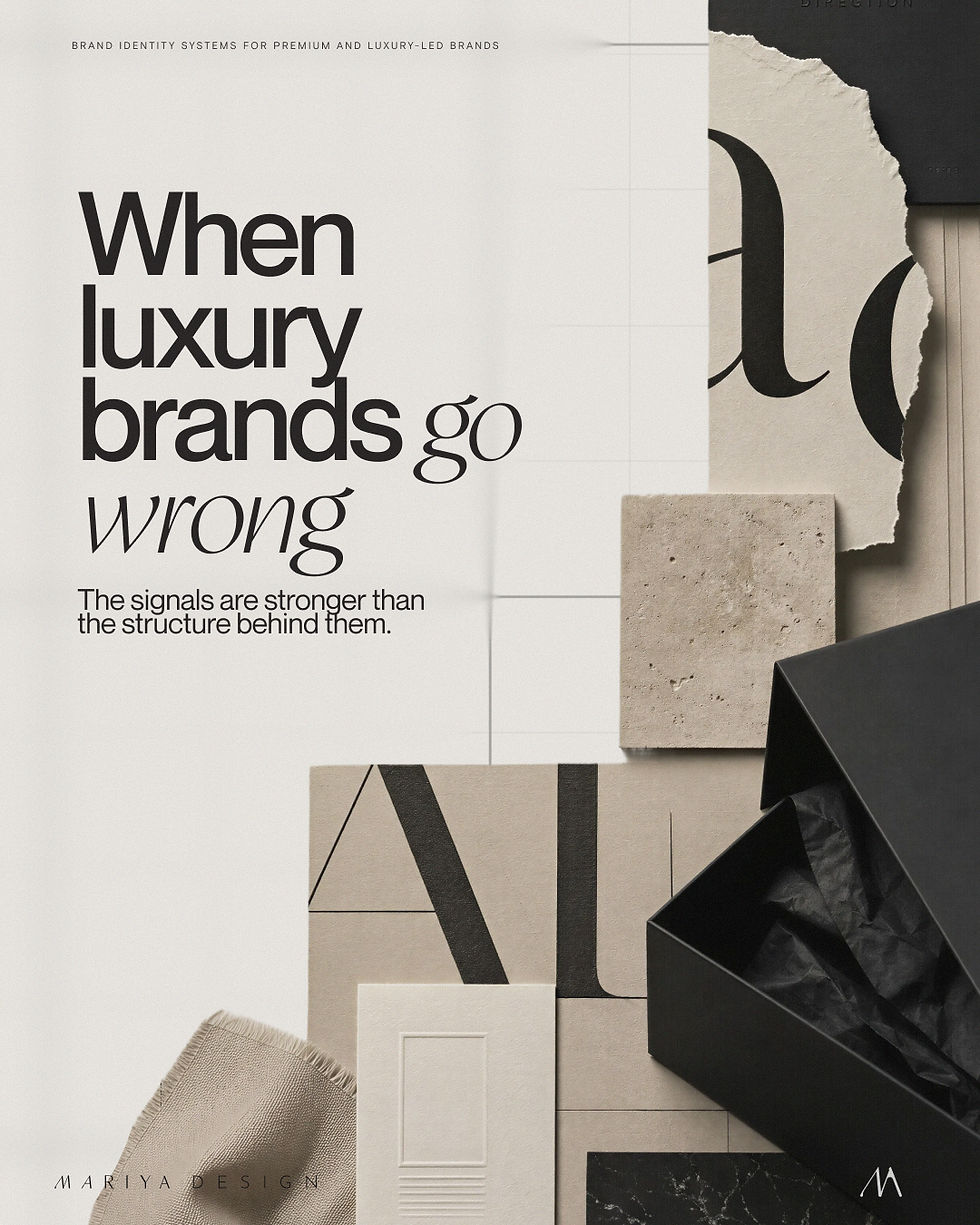
Luxury brands usually go wrong when the visual signals are stronger than the structure behind them.
The brand uses luxury codes, but the reasoning is thin.
Gold detail. Serif typography. Soft neutrals. Black packaging. Large spacing. Editorial photography. Minimal layouts. Quiet language. Expensive mockups.
None of these are wrong.
But they become weak when they are used as shortcuts.
A luxury brand identity can borrow the look of luxury without earning the perception of luxury. That is when the brand starts to feel styled rather than credible.
The customer may not know exactly what is wrong. They may not say the color roles are weak, the hierarchy is unclear, or the digital standards are missing.
They simply feel that the brand is trying too hard.
That feeling is dangerous because luxury depends heavily on belief. If the identity overperforms while the product, price, website, packaging, or customer experience underperforms, the gap becomes visible.
Luxury branding can be quiet.
But it cannot be hollow.
Premium visual identity vs luxury visual identity
Premium visual identity and luxury visual identity often use similar tools: logo, typography, color, imagery, layout, packaging, digital design, and guidelines.
The difference is what those tools need to prove.
A premium visual identity usually needs to prove that the brand is serious, trustworthy, consistent, and above the average level of the category.
A luxury visual identity needs to prove something more selective. It has to make the brand feel like it belongs to a more specific world of value, whether that value comes from craft, rarity, heritage, service, atmosphere, innovation, or cultural meaning.
This affects the visual decisions.
Premium can often be more direct. It may need clearer product explanation, stronger conversion structure, visible quality cues, and a polished but approachable tone.
Luxury may need more restraint, more atmosphere, more controlled pacing, more material presence, and a stronger sense of what is left unsaid.
That does not mean luxury should be unclear.
Confusion is not luxury.
But luxury often uses hierarchy differently. It may slow the customer down. It may use fewer words. It may rely more on material, space, image, rhythm, and controlled detail.
Premium often needs to help the customer decide.
Luxury also needs to help the customer desire.
Packaging differences: clarity vs proof
Packaging is where the difference becomes very visible.
Premium packaging usually needs to make the product feel credible and easy to understand. It has to support the price, explain the product, organize variants, and avoid looking generic or cheap next to competitors.
Luxury packaging also needs those things, but it carries more symbolic weight.
It becomes physical proof of the brand’s level.
The material, finish, structure, opening experience, spacing, label hierarchy, and information design all start to matter more. The customer may read the package, but they also judge how it feels, how it photographs, how it sits in the hand, how much care appears to be behind it.
A premium package can be excellent without being luxurious.
It may be clear, trustworthy, polished, and well structured.
A luxury package usually needs to create a stronger sense of value, atmosphere, or ritual.
That is why luxury packaging cannot be solved only by adding foil, embossing, heavy stock, or a rigid box. Those details can support perception, but they cannot replace clear hierarchy and a meaningful product system.
Material helps.
Structure matters more.
Digital differences: trust vs atmosphere
Digital presence is another place where premium and luxury identity can separate.
A premium website usually needs to build trust quickly.
It should make the offer clear, organize information well, support conversion, and make the brand feel legitimate. The customer should understand what the product is, why it matters, how it works, and why it is worth paying for.
A luxury website also needs trust, but it often needs a stronger atmosphere.
The pacing, typography, imagery, spacing, motion, and product storytelling may need to feel more controlled. The experience should not feel like a generic template filled with premium images.
This is where luxury brands often break.
The packaging feels elevated, but the website behaves like a standard ecommerce build. The product looks expensive, but the product page does not support the perception. The imagery creates desire, but the layout weakens it.
A luxury identity needs digital standards because the website is no longer a secondary touchpoint.
It is where the customer tests whether the brand is as credible as the visual world suggests.
The package may start the promise.
The website has to continue it.
When a brand should stay premium instead of forcing luxury
Not every brand should become luxury.
Some brands become stronger when they stay premium.
A premium brand can still be beautiful, refined, profitable, and highly desirable. It can still charge more than the mainstream category. It can still build loyalty, recognition, and trust.
Forcing luxury can make a brand feel less natural.
It may become too quiet, too distant, too slow, too formal, or too disconnected from the audience. It may start using visual codes that do not match the product, price, or customer expectations.
This is especially important for brands that need warmth, accessibility, education, practicality, or frequent repeat purchase.
A premium wellness product, expert service, food brand, skincare line, or lifestyle offer may need to feel elevated without becoming exclusive in a way that works against buying behavior.
Luxury can create desire.
It can also create distance.
That distance is useful only when the brand can support it.
How to decide what level your brand needs
The decision between premium and luxury should not start with taste.
It should start with the role the brand needs to play in the customer’s mind.
What level of trust does the customer need before buying? What does the price require the brand to prove? How much explanation does the product need? How much atmosphere does the experience need? Is the brand selling accessibility, expertise, ritual, status, craft, performance, intimacy, or rarity?
Those questions affect the visual identity.
They affect typography, color, imagery, packaging, website behavior, content, product hierarchy, and guidelines.
A brand that needs premium clarity should not hide behind luxury silence.
A brand that needs luxury atmosphere should not behave like a generic premium template.
The right identity level is the one that supports the product, price, audience, and customer experience without forcing the brand into a costume.
Premium brand identity and luxury brand identity are not opposites.
They are different levels of perception.
The work is knowing which one the brand actually needs.

Choose the right level of perception
Not every brand needs to become luxury.
Some need clearer premium positioning. Some need stronger luxury perception. Some need a better system connecting packaging, website, content, and customer experience.
The decision should follow the product, price, audience, and customer journey, not a preference for luxury aesthetics.
Need to decide whether your brand needs premium clarity, stronger luxury perception, or a more connected system?
I’ll review the current brand and recommend the right starting point.