Why Brand Guidelines Fail to Prevent Inconsistency at Scale

Updated: Sep 29
Brand guidelines can be beautifully presented and still leave practical questions unanswered. A designer finds the typefaces but cannot tell how to set a crowded product page. A supplier receives the logo but does not know which version belongs on a dark material. A marketing team has campaign examples, yet none explains how far the style can change.
The useful question is where the guidance stops helping someone do the work. Sometimes the document needs better examples. Sometimes approved files are difficult to find. Sometimes the instructions are clear, but no one is responsible for keeping them current.
Good guidelines are part of a working brand identity system. Their format matters less than whether people can find, understand, and apply the decisions inside them.
The rules describe ingredients without explaining their roles
A palette and a font list are necessary references. They do not, by themselves, explain how those elements work together.
Color guidance becomes more useful when it explains which color leads, which supports, and where contrast needs attention. Typography guidance should show relationships between headings, product names, supporting information, and small text in the formats the brand actually uses.
You do not need a rule for every possible composition. You need enough explanation to make the recurring choices consistent and enough flexibility for a designer to solve a new problem well.
The examples do not match everyday work
A launch campaign can demonstrate the identity beautifully while telling a team very little about its next sales deck or product extension. If the guidelines only show idealized applications, people must fill the gaps when real information arrives.
Include representative situations: a long headline, a dense information panel, a small digital placement, and a product with more required content than the first launch. Explain what changed and why. An example is more useful when the reader can understand the decision behind it.

People cannot identify the current source
The issue is often version clarity. A supplier may be working carefully from an old file while the internal team assumes the latest artwork has reached everyone.
Create a clear starting point that links to the current guidelines and approved assets. Give files meaningful names and revisions. Separate working material from approved handoff files, and identify which source should be used for each task. This can work across Figma, a project hub, and shared folders when their roles are clear.
The boundary between fixed and flexible is missing
Some choices protect recognition. Others should adapt to the channel, content, or campaign. If that boundary is unclear, teams may either copy an unsuitable example or change more than they intended.
For example, the product naming hierarchy may stay stable while the campaign headline changes. A digital layout may rearrange content for a smaller screen while keeping the same type relationships. Document the principle and show an adaptation so people can see how to use it.
No one maintains the guidance
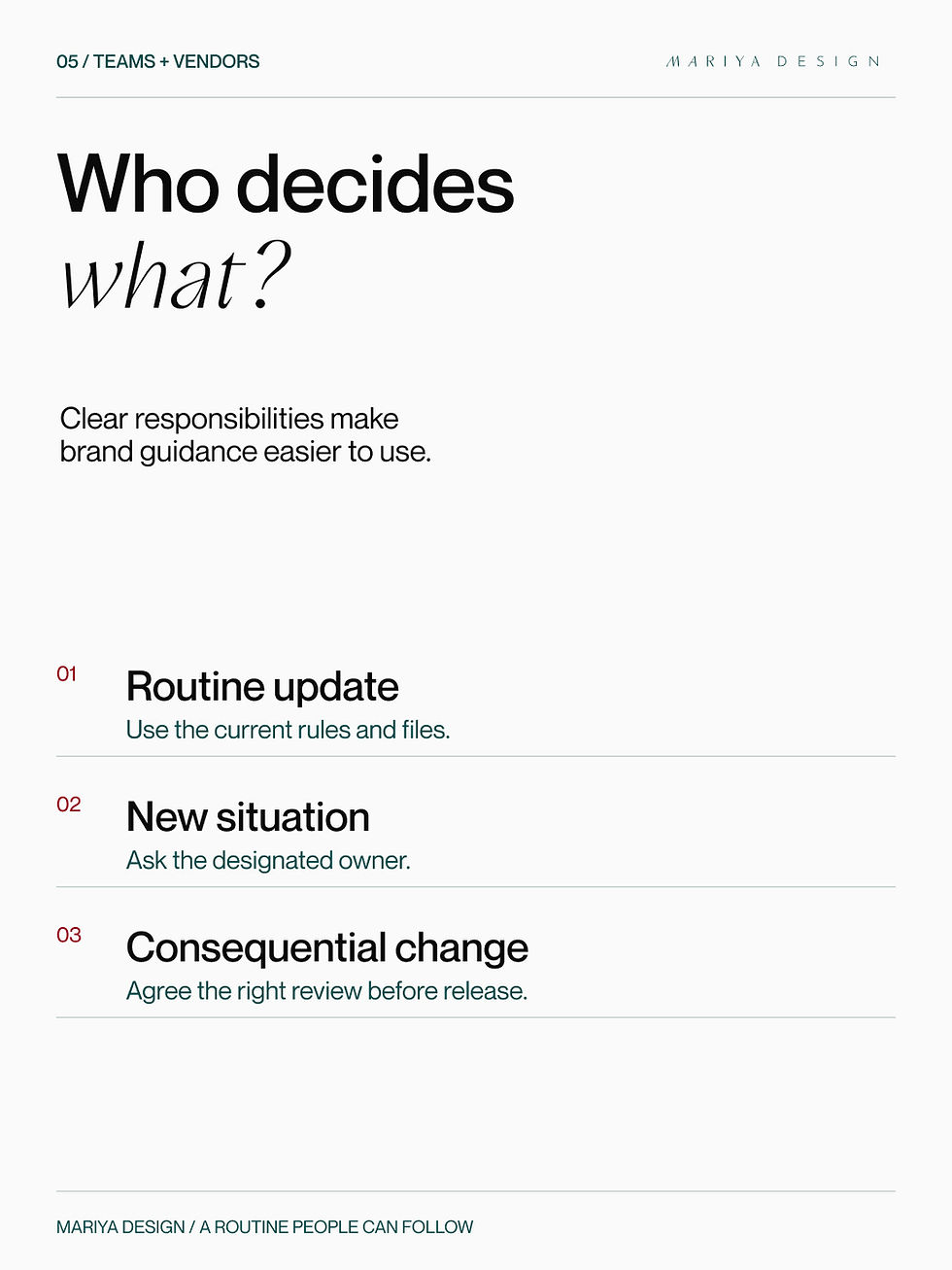
Guidelines need an owner who can answer questions, record approved exceptions, and arrange updates when the business adds new requirements. This does not mean every asset needs that person's approval.
Separate routine use from changes that deserve review. A new application of an established layout may be straightforward. A new product category, logo change, or unfamiliar production format may need a more considered decision.
How I make guidance more useful
For an agreed application, I aim to connect three things: the rule, a relevant example, and the file or direction someone needs to use. The right depth depends on the project and the people receiving it.
In SAE-REN, the identity extends across beauty products, digital, and a physical beauty environment. Those applications need shared recognition and guidance appropriate to their different contexts. The guideline previews above are shown with confidential detail blurred.
Reusable templates, finished application assets, and supplier support are separate scope decisions. A guidelines document should be clear about what is included and what requires further design work.
Start with the question people keep asking
Take a recent piece of work that caused confusion. Can the person responsible find the relevant rule? Does an example address the situation? Are the right files available? Is it clear who can resolve an exception?
That exercise gives you a specific place to improve. For a wider review, use the brand audit checklist. For the team routine around the guidance, read how to prevent brand inconsistency.
If the gaps extend across several parts of the brand, the Strategic Brand Audit can help define the work. Share where the current guidance is falling short.